
Did you recently have a root canal and wonder if you need a crown? Dental crowns are often suggested after a root canal to make the tooth strong again, help it work properly, and look normal. Knowing why crowns are needed, when to get them, and what types are available can help you take care of your teeth.
What Is a Dental Crown After a Root Canal?
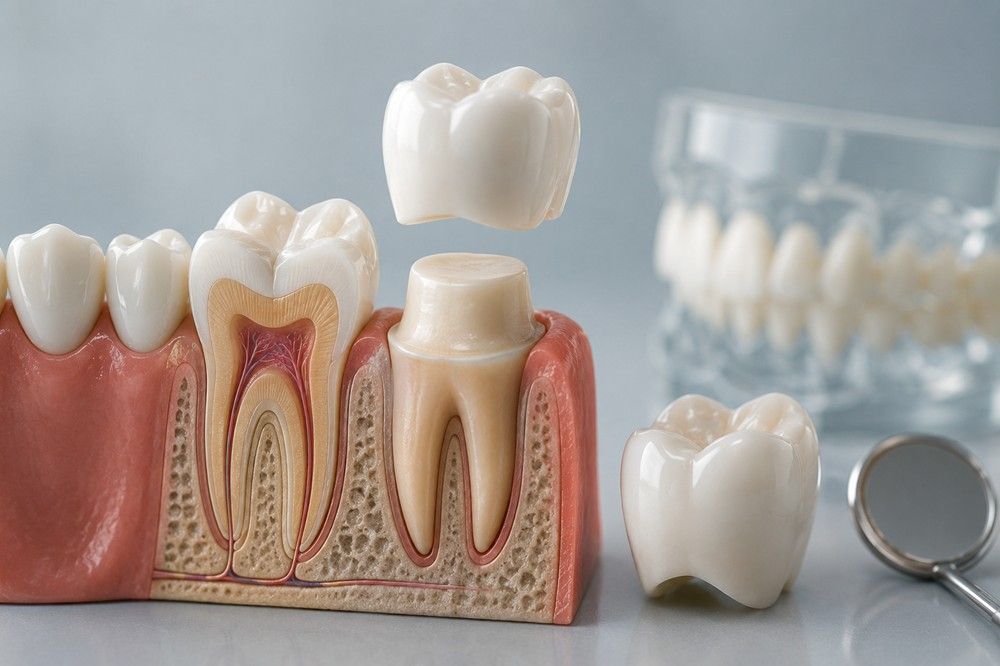
A dental crown after a root canal is a protective cap placed over a treated tooth to restore its structure. Root canal therapy removes infected pulp from inside the tooth, leaving it clean but often weaker and more prone to fractures. Crowns reinforce the tooth, allowing it to function normally while protecting it from further damage.
Reasons a crown may be needed after a root canal include:
- Strengthening a weakened tooth
- Preventing fractures or cracks
- Restoring chewing function
- Improving the appearance of a discoloured tooth
- Sealing the tooth to prevent reinfection
Do You Need a Crown After a Root Canal?
The answer depends on the type of tooth and the extent of the damage.
Guidelines include:
- Back teeth (molars and premolars): Usually need crowns because they do most of the chewing.
- Front teeth (incisors and canines): Crowns might not be needed if the tooth is strong. Bonding or veneers can be used instead.
- Teeth with big fillings or cracks: Crowns are suggested to protect the tooth and make it last longer.
Consulting a skilled dentist in Macleod can help determine whether your tooth requires a crown after a root canal.
Why Crown After Root Canal is Important?
Understanding the crown after root canal treatment helps patients see the long-term benefits of protection.
- Preventing Fractures: Root canal-treated teeth become brittle over time. Crowns provide a strong outer layer to prevent breakage.
- Restoring function: Crowns help the tooth chew and bite normally without pain.
- Preventing infection: Crowns cover the tooth and lower the chance of getting infected again.
- Improving look: Crowns make front teeth look natural in color, shape, and position.
Without a crown, a treated tooth may crack, split, or fail, which could require additional treatment or extraction.
Types of Dental Crowns
There are several options for dental crowns near you after a root canal:
- Porcelain crowns: Look natural, best for front teeth.
- Ceramic crowns: Strong and nice-looking, good for visible teeth.
- Metal crowns: Very strong, best for back teeth that do a lot of chewing.
- Porcelain-fused-to-metal (PFM): Strong and looks natural.
The dentist will choose the best type based on where the tooth is, how it is used, and how it looks.
How to Care for a Crown After a Root Canal
With care, your crown will last many years.
- Use a toothbrush with soft bristles twice a day.
- Gently floss around the crown to prevent plaque buildup.
- Try not to chew very hard foods or objects that could damage the crown.
- Regular checkups and professional cleaning at Macleod dental clinic.
If you follow the steps, your crown stays secure, functional and looking like your natural hair.
Signs You Might Need a Crown After a Root Canal
There are certain signs that your tooth may need a dental crown.
- The tooth feels weak
- Cracks or chips visible.
- The treated tooth has become discoloured or stained.
- Hard to chew on that side.
- Discomfort or sensitivity in the affected tooth.
If you catch these signs early enough, you can minimize damage and preserve your health.
Benefits of Crowns After Root Canal
- Lets you chew and bite normally
- Protects the tooth from breaking
- Makes the tooth look better
- Lasts a long time after a root canal
- Lowers the chance of needing more dental work
Protect Your Tooth and Smile Today!
A root canal saves your tooth, but your crown must be right and durable for years. At Macleod Dental Choice, expert dentists provide precision crown placement that is comfortable and restores strength, function, and appearance. Avoid fractures or complications from now. Contact them right now to get a consultation and start your journey towards a healthy, functional, confident smile.
FAQs
Can a tooth survive after a root canal without a crown?
Yes, sometimes, especially for small front teeth with little damage. But without a crown, the tooth is more likely to break.
How long do crowns last after a root canal?
With good care, crowns can last 10–15 years or more, depending on the type of crown, how you take care of your teeth, and your chewing habits.
Will the process hurt?
It’s usually painless to fit a crown. Local anesthesia is a comfortable process, and sensitivity is mild most of the time.
Is it possible to have crowns in one visit?
Some clinics have the technology capable of making crowns the same day, while others will take impressions on one visit and place the crown on another.